

Crimes Linguistics: Combating Financial Fraud
Course Overview
A concise overview of the program.
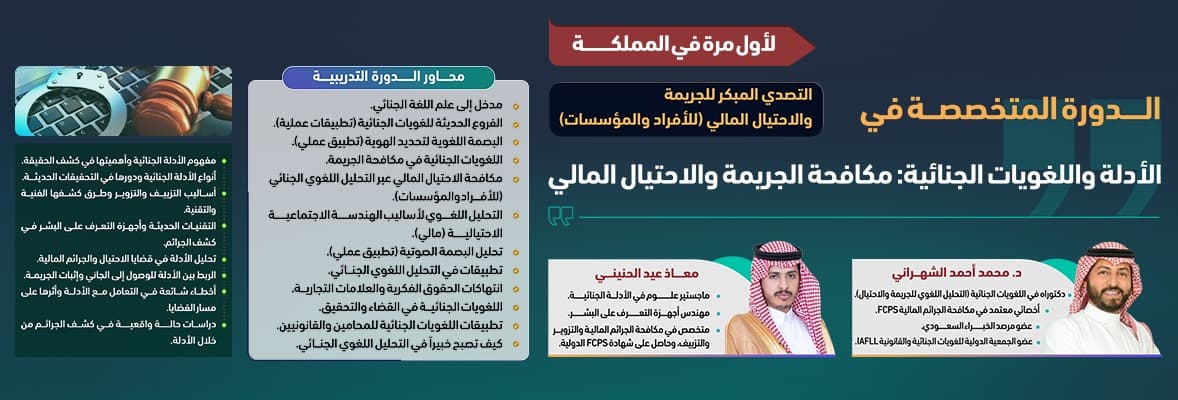
The "Forensic Evidence & Linguistics: Combating Crime and Financial Fraud" program delivers a specialized training path focused on deploying forensic evidence and applied linguistics to detect crimes and analyze financial fraud patterns at both individual and institutional levels. It provides participants with a practical understanding of modern forensic linguistic concepts, exploring the role of linguistic and vocal "fingerprints" in supporting professional investigations.
The program highlights the use of forensic linguistics in analyzing fraudulent texts, messages, and content to uncover deception and social engineering tactics. Furthermore, it clarifies the role of evidence in tracking financial crimes, intellectual property violations, and trademark infringements, supporting legal and regulatory bodies in managing complex cases. This program seamlessly blends theoretical knowledge with high-level practical applications to build advanced investigative skills in this niche field.
Course Content
What you will cover during this program.
🔹 Introduction to Forensics: Comprehensive overview of forensic evidence and linguistics in crime and fraud detection.
🔹 Forensic Linguistics Domains: Exploring modern fields of linguistic science and their practical applications in investigation.
🔹 The Linguistic Fingerprint: Understanding linguistic identity, stylistic profiling, and text-based identification.
🔹 Combatting Fraud: Deploying forensic linguistics to expose fraudulent methods and deceptive communication.
🔹 Institutional Fraud Analysis: Analyzing financial fraud in organizations through linguistic patterns and expressive styles.
🔹 Social Engineering Language: Decoding the specific language of social engineering, influence, and deception tactics.
🔹 Acoustic Forensics: Introduction to voiceprint analysis and its role in forensic and investigative applications.
🔹 Forensic Scenarios: Practical applications of linguistic analysis on real-world cases and professional scenarios.
🔹 Counterfeiting & Forgery: Understanding the role of forensic evidence in detecting document forgery and tampering.
🔹 Evidence Classification: Identifying types of forensic evidence and their critical importance in modern investigations.
🔹 Legal Integration: Linking forensic evidence and linguistics to the judiciary and correlating evidence with the crime scene.
🔹 Intellectual Property (IP): Analyzing cases of IP theft, trademark violations, and related forensic infringements.
🔹 Investigation Pitfalls: Reviewing common errors in handling evidence and their impact on legal proceedings.
🔹 Real-World Case Studies: In-depth review of successful crime detection through forensic analysis and evidence.
Course Objectives
What you will achieve by the end of this program.
- 🔹 Fraud Detection Mastery: Empowering participants to utilize forensic linguistics to expose financial crimes and fraud schemes.
- 🔹 Textual Forensic Analysis: Developing the ability to scientifically examine texts, messages, and fraudulent digital content.
- 🔹 Biometric Insights: Enhancing skills in recognizing and utilizing linguistic and vocal fingerprints in investigations.
- 🔹 Social Engineering Defense: Elevating proficiency in analyzing social engineering tactics and deceptive psychological triggers.
- 🔹 Legal/Forensic Synergy: Understanding the relationship between forensic evidence, factual proof, and legal contexts.
- 🔹 Best Practices in Evidence: Identifying elite standards for evidence collection and analysis while avoiding procedural errors.
- 🔹 Specialized Legal Support: Equipping participants with the knowledge required to handle fraud, forgery, and intellectual property cases.
- 🔹 Professional Foundation: Building a sophisticated career base for those specializing in forensic linguistic analysis and financial investigations.
Course Overview
A concise overview of the program.
The "Forensic Evidence & Linguistics: Combating Crime and Financial Fraud" program delivers a specialized training path focused on deploying forensic evidence and applied linguistics to detect crimes and analyze financial fraud patterns at both individual and institutional levels. It provides participants with a practical understanding of modern forensic linguistic concepts, exploring the role of linguistic and vocal "fingerprints" in supporting professional investigations.
The program highlights the use of forensic linguistics in analyzing fraudulent texts, messages, and content to uncover deception and social engineering tactics. Furthermore, it clarifies the role of evidence in tracking financial crimes, intellectual property violations, and trademark infringements, supporting legal and regulatory bodies in managing complex cases. This program seamlessly blends theoretical knowledge with high-level practical applications to build advanced investigative skills in this niche field.
Course Content
What you will cover during this program.
🔹 Introduction to Forensics: Comprehensive overview of forensic evidence and linguistics in crime and fraud detection.
🔹 Forensic Linguistics Domains: Exploring modern fields of linguistic science and their practical applications in investigation.
🔹 The Linguistic Fingerprint: Understanding linguistic identity, stylistic profiling, and text-based identification.
🔹 Combatting Fraud: Deploying forensic linguistics to expose fraudulent methods and deceptive communication.
🔹 Institutional Fraud Analysis: Analyzing financial fraud in organizations through linguistic patterns and expressive styles.
🔹 Social Engineering Language: Decoding the specific language of social engineering, influence, and deception tactics.
🔹 Acoustic Forensics: Introduction to voiceprint analysis and its role in forensic and investigative applications.
🔹 Forensic Scenarios: Practical applications of linguistic analysis on real-world cases and professional scenarios.
🔹 Counterfeiting & Forgery: Understanding the role of forensic evidence in detecting document forgery and tampering.
🔹 Evidence Classification: Identifying types of forensic evidence and their critical importance in modern investigations.
🔹 Legal Integration: Linking forensic evidence and linguistics to the judiciary and correlating evidence with the crime scene.
🔹 Intellectual Property (IP): Analyzing cases of IP theft, trademark violations, and related forensic infringements.
🔹 Investigation Pitfalls: Reviewing common errors in handling evidence and their impact on legal proceedings.
🔹 Real-World Case Studies: In-depth review of successful crime detection through forensic analysis and evidence.
Course Objectives
What you will achieve by the end of this program.
- 🔹 Fraud Detection Mastery: Empowering participants to utilize forensic linguistics to expose financial crimes and fraud schemes.
- 🔹 Textual Forensic Analysis: Developing the ability to scientifically examine texts, messages, and fraudulent digital content.
- 🔹 Biometric Insights: Enhancing skills in recognizing and utilizing linguistic and vocal fingerprints in investigations.
- 🔹 Social Engineering Defense: Elevating proficiency in analyzing social engineering tactics and deceptive psychological triggers.
- 🔹 Legal/Forensic Synergy: Understanding the relationship between forensic evidence, factual proof, and legal contexts.
- 🔹 Best Practices in Evidence: Identifying elite standards for evidence collection and analysis while avoiding procedural errors.
- 🔹 Specialized Legal Support: Equipping participants with the knowledge required to handle fraud, forgery, and intellectual property cases.
- 🔹 Professional Foundation: Building a sophisticated career base for those specializing in forensic linguistic analysis and financial investigations.
Target Audience
This program is designed for the following profiles.
- 🔹 Compliance & Anti-Fraud Teams: Compliance officers and internal investigation units within the financial sector.
- 🔹 Audit & Risk Management: Internal/External auditors and risk management specialists.
- 🔹 Legal Professionals: Lawyers, legal consultants, and researchers in criminal and commercial law.
- 🔹 Cybersecurity & Digital Forensics: Information security officers and digital investigators involved in communication analysis.
- 🔹 Regulatory & Banking Personnel: Employees in regulatory bodies, financial institutions, and major corporate sectors.